Para leitores em português: Duna: O Não Messias
I begin this text by giving a bit of context. Faith, religion, and messianism are part of my daily life. I’m a Christian, Protestant. In recent years, my career as a filmmaker has developed within this context. Let’s talk about Dune, the two parts as a whole.
Dune, like so many other productions, presents a narrative full of messianic signs and references. The idea of a saviour, a prophet who will save humanity, appears in Star Wars, Avatar, and many other titles. For me, this only highlights humanity’s search for salvation.
This is the point that makes heroes and their mythological journeys so irresistible to the public. I remember Campbell. The possibility of someone from everyday life having a transformative journey and achieving a decisive victory. The hero, saviour, messiah.
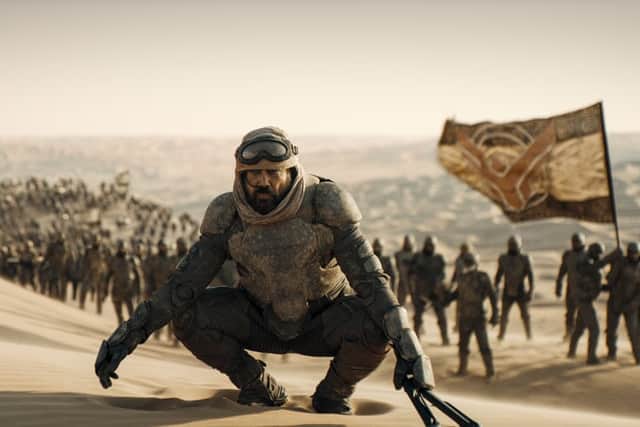
Frank Herbert’s story is not subtle in its religious references. Denis Villeneuve’s films are even more explicit. The Bene Gesserit, macabre nuns, have a power plan of their own, even beyond the emperor. The believers are manipulated to the point of fighting for a holy war. Texts said to be prophetic are used left and right. Paul and Jessica use fear and religiosity to carry out the revenge of the Atreides’ house.
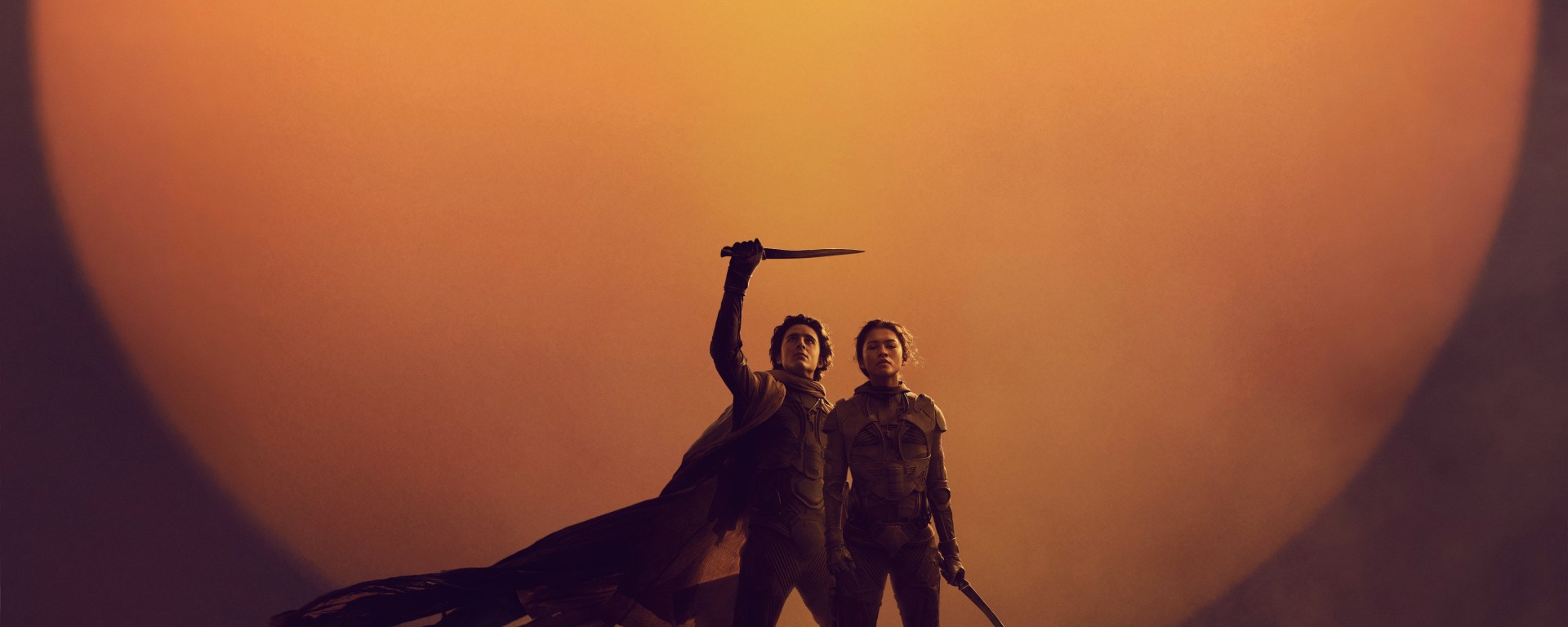
Paul, however, like Moses, David, and so many other saviours of nations and peoples, was destined to fail. The great love of his life, Chani, represented a path. To keep fighting, remaining faithful to your own essence. But Paul would never have his revenge and would never defeat the oppression of the Harkonnens. And here Timothée Chalamet shines, in the change of tone he gives to Paul when he accepts his destiny.

Human condition prevails. There is no choice. There is no choice between good and evil, there is no free will. Paul succumbs to power to deliver a final blow to the emperor and the Harkonnens, being one of them (Paul has Harkonnen blood). He oppresses, uses the faithful (Fremen), and starts his holy war. He goes from royalty to Fremen, and from Fremen to royalty. Like all so-called messiahs, the biblical narrative presents this over and over again; he returns to his original condition, albeit matured. It’s cyclical. He lost. He lost his true self. He loses Chani (here a difference from the movie to the book, which doesn’t bother me). Zendaya rocks. A sad ending that brought tears to my eyes and took me a while to digest.
Paul is an anti-hero. His journey is flawed. And that today is a synonym of complexities and contradictory characters. In fact, the number of anti-heroes we have in productions seems to be increasing. But of course! The real world is hopeless, and the criteria for messiahs need to be lowered. We seek increasingly realistic, human characters because heroes are impossible and not believable. And what is the human condition? Imperfect, sinful.
I saw several comments talking about this relationship between Messiah, Power, Religiosity, Faith, and War. Fundamentalism ( religious fanaticism and extremism). One was even associating Christians with the Fremen and how we can be manipulated by someone with a power agenda. What about that, Pedro? Does it ring a bell?
Let’s go. Emotional religiosity and Faith expose the believers to this type of situation. Rational Faith, which seeks discernment, leads to another path. I wished Paul was a representation of my messiah, but it wasn’t possible. Jesus, the Christian messiah, like Paul, had royal blood. But here the comparisons end.
Jesus rejected political and military power. He was against religiosity. He was rejected by his people. He was man and God. He conquered sin. Perfect sacrifice. He had a choice and chose to die. He resurrected (Paul, when he took the blue liquid, did not die, the vital signs were undetectable as Lady Jessica said). There was no holy war. And notice, I use terms in the past tense. The Christian Messiah has already come, and salvation is already a reality. Christians await the second coming, and that is a fundamental difference.
Dune reminds me of my human condition and how I, or any other man, would be unable to save anyone, let alone a nation or people. I haven’t read “Dune Messiah,” I don’t know what direction the story takes. But so far, these are the words that wandered my mind. It’s a powerful work. Visually incredible. I could write about Villeneuve’s mise-en-scène, about how Greig Fraser’s photography is wonderful, and how Hans Zimmer’s soundtrack captures the melancholic tone of the end. I could write about how great it is to have a spectacular film that will transcend generations. I could write about the changes from the book. But I chose to write about The Messiah.
 Pipoca Crítica
Um comentário sobre “Dune: Not the Messiah”