Ainda Estou Aqui – Versão em Português
I’m Still Here timidly entered my radar. Keeping up with Brazilian productions while living abroad has its challenges. The buzz around the film kept growing, especially on social media, until the nominations came—and then the Golden Globe win.
“And Fernanda Torres, huh?” my parents asked. Even colleagues and friends abroad wanted to know who this actress was. I didn’t have much to say: “Fernanda Montenegro’s daughter, who was in Os Normais.”
“And have you seen the movie?”
Not yet.
Of course, as a filmmaker, I know Central Station (1998) and Walter Salles. The story of the “stolen Oscar”, which I put in quotes simply because I don’t have an opinion on the 1999 awards.
Salles, whose contribution to Brazilian cinema goes beyond being the director of Central Station, occupies my memory as a filmmaker with a deep eye for personal stories. Stories marked by the chaos and violence of the world—the danger of simply living. Mea culpa for not delving deeper into his filmography, for not having watched works like Foreing Land (1995) and The Motorcycle Diaries (2004).
The Oscar nomination excited me, especially with the chance to see the film in theatres. I got my ticket and was honestly happy to see the sessions selling out, even if just in a small arthouse cinema in Vancouver.
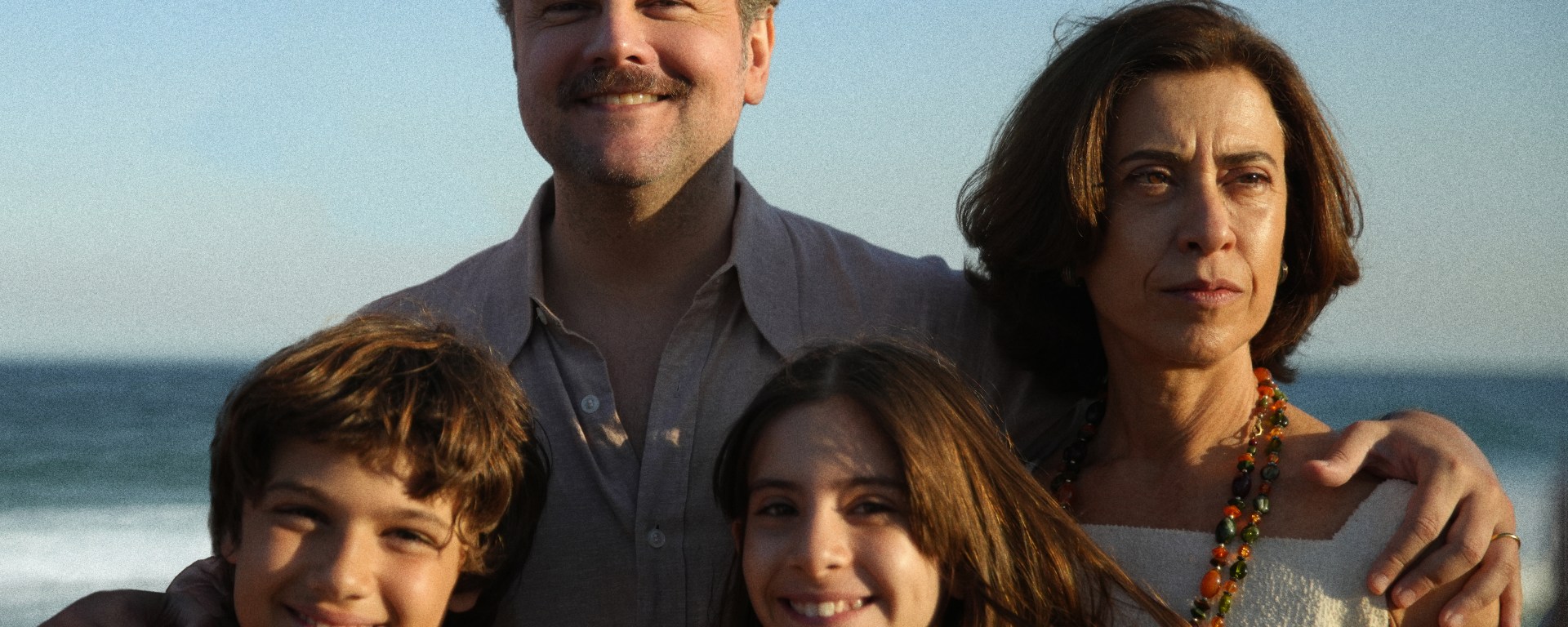
I’m Still Here is based on Marcelo Rubens Paiva’s book of the same name. The year is 1971, Rio de Janeiro, during the military dictatorship. The privileged Paiva family lives in a fancy neighbourhood of the capital. Good food, influential friends, and what I would call the Brazilian Dream of life in the ’70s. Eunice Paiva (Fernanda Torres), diving into the waters of Leblon. Her five children with former congressman Rubens Paiva (Selton Melo) playing on the beaches of Rio. The city’s glow, the warmth, and the comfort of the cinematography’s colors.
At home, Rubens balances his time between his engineering office and his family. A father who provides and is present—whether for his youngest daughter’s lost tooth or a foosball match with his son (Marcelo). Everything would be perfect, if not for the military helicopters and trucks, the kidnappings and bombings of the resistance. Across the street, or on the television screen, these conflicts seem distant—but not distant enough. The eldest daughter is sent abroad to avoid involvement with student movements. Eunice watches as Rubens receives mysterious calls and packages. She knows something is going on.
Eunice’s life turns upside down (a euphemism) when Rubens is taken away for questioning (arrested). Eunice is systematically and brutally interrogated by the DOI-CODI (intelligence and political repression agency). Her husband is a conspirator. And with no further explanation, she is released. Marcelo, Veroca, Nalu, Eliana, and Babiu never saw their father again. Eunice, a warrior (words fail me), upon realizing Rubens is dead (the scene with the dog), does the impossible—she provides for and raises five children. The warm colors, the glow of Rio, disappear.
I’m Still Here is not a film about the military dictatorship. It’s not a film about regimes A or B, about left or right. In fact, reducing the work to that says a lot about humanity’s ability to turn a blind eye, distort reality, and relativize atrocities, abuses, and absurdities when the goal is to preserve a political project that, ridiculously, someone defends with tooth and nail. Rage when I see people calling the film leftist fake news or others saying it reminds us that fascism is lurking. Stupid, small-minded, limited.
Even less is it a film about doing your part in defending democracy. There’s no romance in the idea that the ends justify the means (whether passing letters, committing acts of terrorism, or taking actions in defence of the State). The price is high, and that’s not the discussion. Nor is it about a good time for some or a bad time for others.
So what is it about? Violence. It doesn’t matter where it comes from—crime, the State, side A or B. It doesn’t matter if it’s 1960 or 2025. The moral collapse of society. The shattering of a family. The interruption of life—the husband and father who will never return, a stolen childhood. A forced maturity. The voice, the image, the hug, the kiss that become only memories. It’s about never being the same again.
Violence lurks. It is opportunistic, creeping into and consuming the warmth of families in Brazil and around the world. Irreparable damage.
Eunice Paiva? She is not a symbol of resistance or the resistance. But she is resilient. She reinvents herself, fights. Gathers the broken pieces and builds something new. Yes, she smiles in the face of adversity, but it’s not the same smile as before. Her gaze gives away the suffering that no one should have to endure.
I saw Eunice’s gaze—Fernanda Torres’s gaze. I heard “It’s okay.” I stared into the abyss of a father who would never come back. And it wasn’t during the dictatorship. Though, by God’s grace, my story had a different outcome (which is why I won’t dare say I know what this family went through), I have encountered violence. I relate, Marcelo.
A victim never overcomes violence. The act lingers. You learn to live with it, and in the best-case scenario, you overcome the paralysis, the shock. That’s how it is with the Paivas. In old age, whether still here or not, with Alzheimer’s, Eunice (played by Fernanda Montenegro) still holds out hope for closure, for resolution. There is no death certificate, no truth commission that can repair what happened. Only a divine act is capable of healing such a persistent wound. That’s how it is for me—and for so many others.
The power of Marcelo’s words. Letters (dreams, desires, and memories), family, trauma, and death, rimes of Walter Salles. A film that resonates.
 Pipoca Crítica
Um comentário sobre “I’m Still Here”