
Avatar: Fire and Ash has just hit theatres, bringing closure to James Cameron’s latest return to Pandora. The story arc introduced in The Way of the Water reaches a thrilling conclusion in a visually stunning, action-packed production.
As I did three years ago, I left the theatre with several thoughts, trying to understand why this movie connected with me so deeply. Why it felt like more than a technological showcase, and why it resonated as a narrative rather than just a series of explosions on screen?
In the following lines, I’ll go through a few of the themes I connected with. I’ll look beyond James Cameron’s pantheistic worldview and share some thoughts, not necessarily in chronological order. Spoilers ahead!
Grief
Fire and Ash picks up in the immediate aftermath of The Way of the Water. The second film ended with a deep, powerful epilogue: a funeral ceremony that revealed the beauty of memory and the strength found in collective mourning. I watched The Way of the Water in the months following my grandmother’s death, and connecting to it was inevitable. I would even say that Avatar 2 became part of my healing journey, as the Sully family’s motto resonated deeply with me: family is our fortress, and Sully’s stick together.
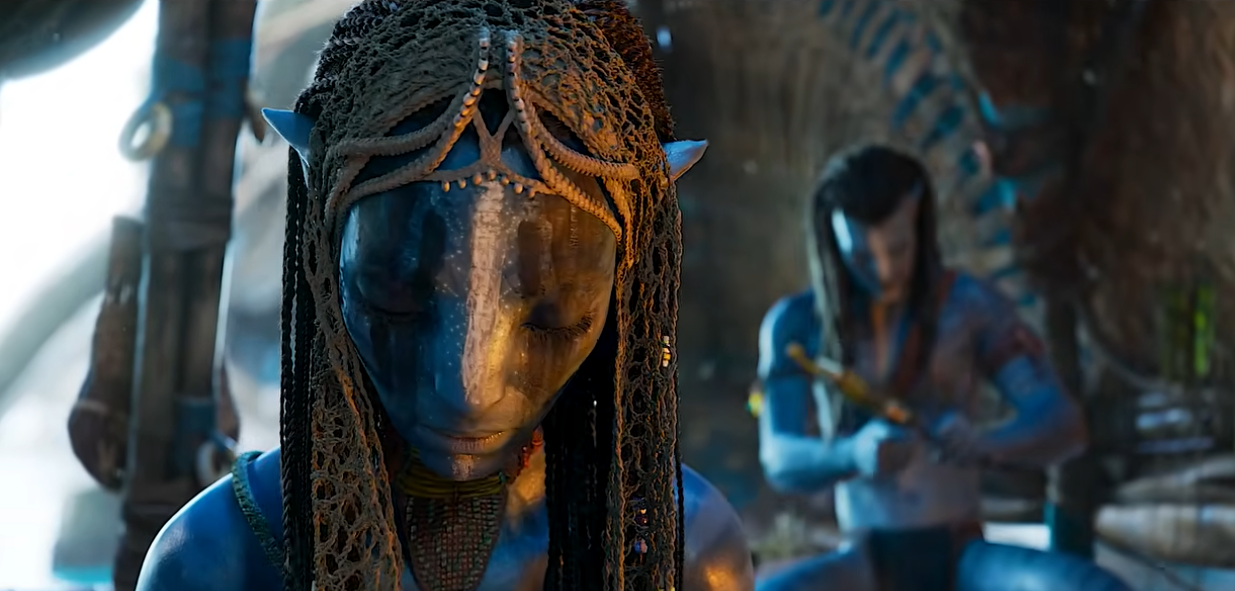
In Fire and Ash, as the family mourns Neteyam’s death during the first act, we see that grief is not a smooth or unified process—just as in real life. Lo’ak deals with guilt. Neytiri channels her grief into hatred toward humans. Everything she has left is her faith that this was Eywa’s desire. Jake keeps himself busy scavenging the battlefield for weapons, avoiding stillness and reflection. Kiri, however, appears more at peace; her deep connection to Eywa and her faith in Pandora’s way seem to calm her heart.
As Tonowari and Ronal suggest, Jake and Neytiri must work through their grief—breaking free from denial and anger. Healing is not optional; it is essential if the family is to remain whole. Unhealed grief can become something far more dangerous: a loss of faith, a fracture of identity, a brokenness that consumes everything around it—much like what we see embodied in the Ash People.
Faith
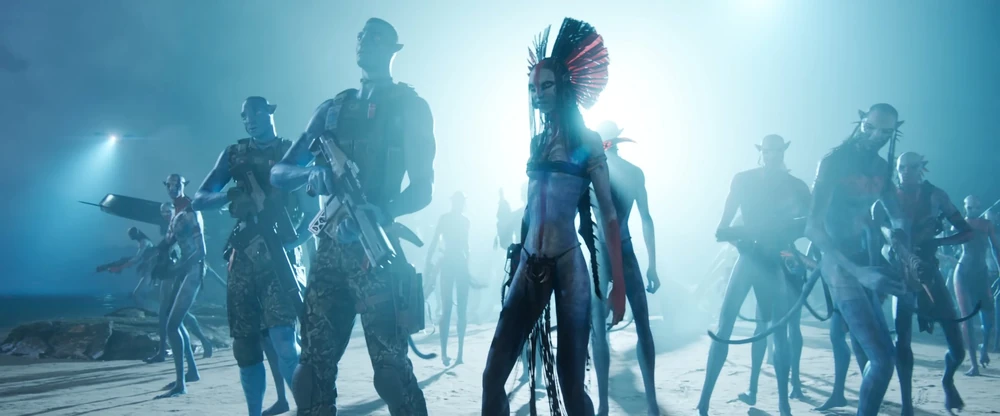
The Ash People. A frightening and violent Na’vi clan that sharply contrasts with everything the audience has seen so far about Pandora’s natives. Among them, there is no peace and no harmony with Eywa, only a vicious cycle of destruction. The loss of faith transforms even the most innocent into something broken, not unlike humanity itself. Where was Eywa when their houses burned down? Were was Eyway when Neteyam died?
It’s not a surprise that Quaritch finds himself at home with them. His quest for revenge blinds him completely, and as Jake observes, he simply does not understand the way of Pandora.
Varang, the leader of the Ash People, serves as a dark mirror of what Neytiri could become. Her pain and rejection of all things human are projected onto Spider, Quaritch’s son. Yet, Jake’s reminder of his own humanity may still be enough to cut through her pain.
Belonging
Spider, definitely my favourite character. He has the best narrative arc. Hated by Neytiri, he does everything in his power to belong to that world, to that family. But his life still depends on a mask (Cameron is a master of foreshadowing). He’s never going to be really free; only a miracle could do that.
The never-ending pursuit that splits teens and adults offers the perfect storm for that miracle to occur. When Spider’s mask fails, he begins to suffocate in Pandora’s toxic air. Kiri prays and does everything she can to save him. He dies, leaving Lo’ak, Kiri and Tuk heartbroken. But the miracle does happen. Spider awakens, breathing Pandora’s air. Changed, forever.
Living within him now, in symbiosis, is a woodsprite, or should I say spirit? His old self has died; he is reborn as a child of Eywa. The parallel to Christian baptism is impossible to ignore: death, rebirth, and transformation.
His freedom, however, sets a new pursuit in motion. His life is now in danger, and perhaps the fate of the entire planet as well. Jake and Neytiri discuss the unthinkable. To sacrifice the boy. In an Abrahamic/ Isaac heart-stopping scene, Jake just can’t do it, and Neytiri finally sees Spider. I see you!
He is no longer just a human child. He is part of a larger family, accepted as Na’vi. Connected to the planet, his spirit will live in Eywa forever.
Family is our fortress
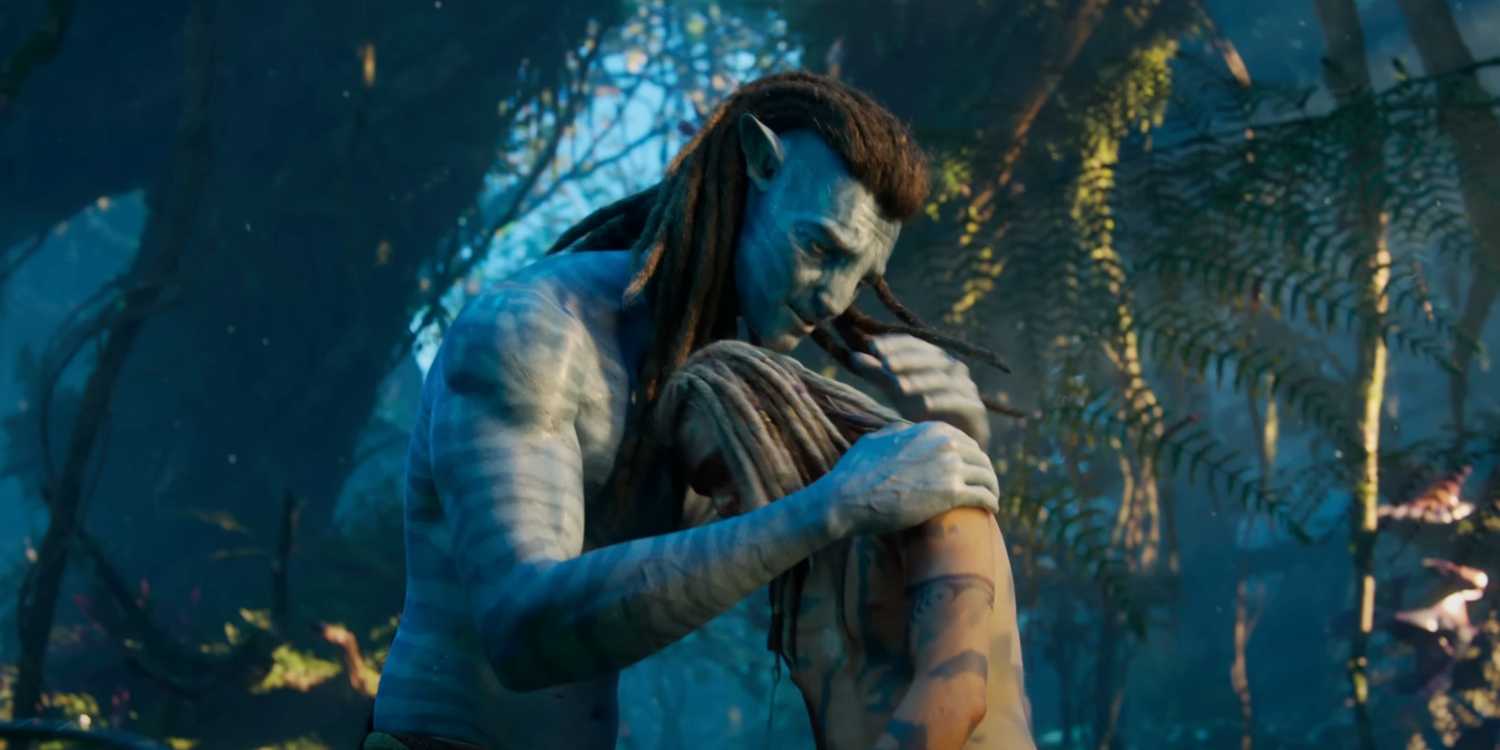
Time alone does not solve grief, largely because it is unrealistic to stop living while time quietly does its work. There was no time for Neytiri; her world was collapsing around her, and she was forced to act. By accepting Spider as her son, she takes a decisive step forward in her journey. Through faith and family, she finally begins to heal.
In a cataclysmic 3rd act, the colonizers return, once again attempting to harvest Pandora’s natural resources, the poisonous metal and Amrita, the liquid that promises eternal life. Humanity wants it, no matter the cost. No one cares for the environment; they are deeply broken.
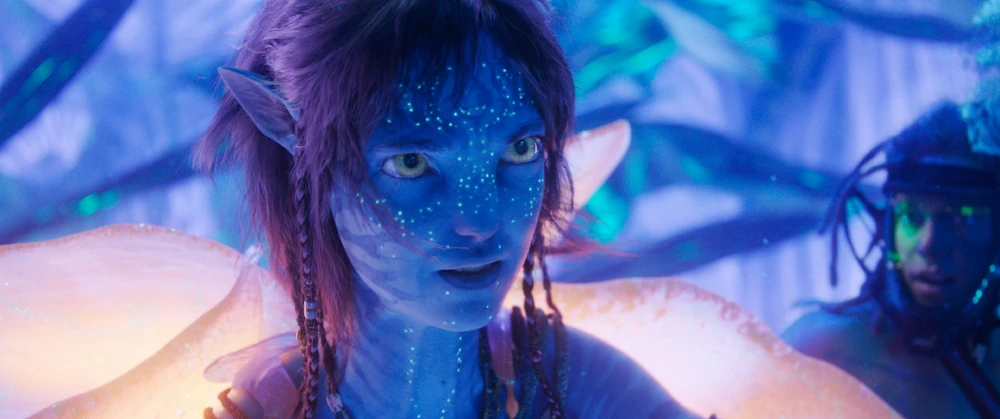
Action overtakes the screen: battles, explosions, and chaos everywhere. Families are torn apart once again, and the Na’vi way of life and the planet are in peril. In a desperate attempt to seek help from Eywa, Kiri risks everything by connecting to the Tree of Ancestors. She reaches out as she has before, but still fails. When hope seems lost, Spider and Tuk—her brothers—appear. Together, they finally reach Eywa and ask for help. She would never be able to do it by herself. As always, Sully’s stick together. And Eywa provided. She took her time, but she provided.
The battle is won. A cowardly and confused Quaritch jumps into an inferno of fire. Did he start to join his life as a native? Jake, once again, Toruk Makto, unites the people and leads them to victory.
Yet in the aftermath, grief remains, and much must be rebuilt. This time, however, they know true strength comes from belonging to a family larger than oneself—a family bound by faith, memory, and connection to something greater than life alone. An eternal family.
In Avatar 3, even though Pandora and human exploration are present, the real conflict comes from the heart. As families adjust to life circumstances, the audience is pulled into reflecting about the real source of strength, the power of faith, love and community.
At times, the rhythm feels frenetic. A few more moments to breathe would be welcome, as action frequently interrupts quieter, more intimate scenes, a clear contrast to The Way of the Water. But that, too, reflects life: it rarely pauses, and we are often forced to keep moving forward. The film explores many themes, though some conflicts feel resolved too quickly, such as Lo’ak’s guilt, while others are barely addressed at all, what is going on with Quaritch.
Avatar: Fire and Ash is not perfect, but nothing is. It’s a simple story? Maybe, but it doesn’t makes it weak. If this marks the end of the franchise, it a satisfying conclusion. Yet, I would gladly return to Pandora to continue following the Sully family’s journey.
 Pipoca Crítica
Um comentário sobre “Avatar: Fire and Ash”